Housing Revolution
Good homes are the keystone which delivers security, dignity and a stake in society.
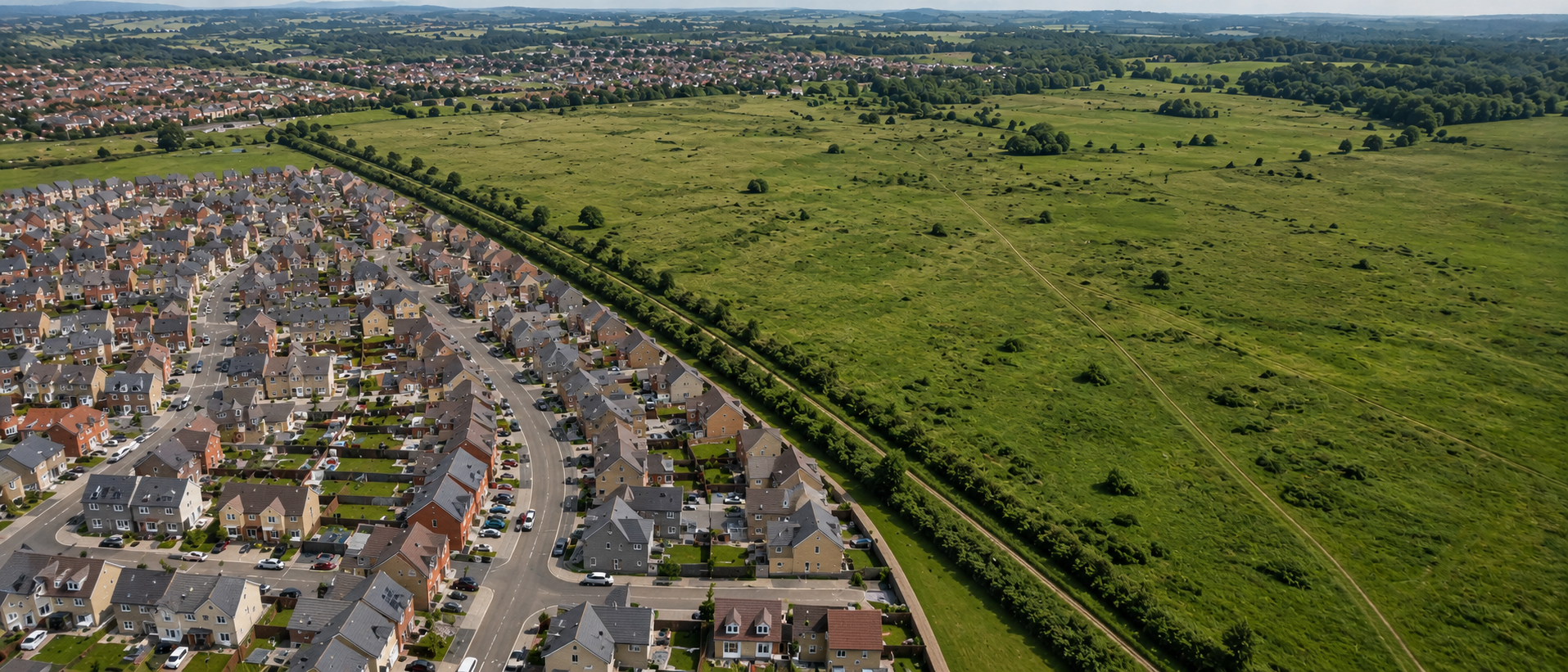
The measure
Council Tax for residential property replaced with a 2% Land Value Tax. It applies to all land with planning permission for homes. It falls due regardless of whether buildings are built or whether anyone has moved in.
The UK's housing crisis has been maintained by a system that rewards sitting on land more than building on it.
A developer who owns land with planning permission and does nothing pays a fraction of the cost that a business occupying a high street premises does. These incentives are backwards.
Residential Land Value Tax is at 2%. Land value is initially calculated as 60% of total property value. So a £300,000 house has a land value of £180,000. The annual charge is £3,600 - replacing a council tax bill that was typically £1,200–2,500. Although LVT is higher, most households will gain significantly from things like higher Income Tax thresholds and National Insurance abolition and are much better off overall.
A young person buying a home today pays 3-4 times what their parents did in real terms. Tax and planning policy created this. Markets followed the incentives they were given. Decades of decisions treated housing as an asset class rather than infrastructure.
Land Value Tax won’t fix all of this immediately. But it does create the incentives for a lasting solution to develop.
Expected impact
- Faster delivery of new homes as land banking becomes costly
- Vacant homes put on the market or listed for rent, increasing supply
- House prices rise more slowly as speculation loses its advantage
- Renting becomes more affordable because there are fewer renters trying for each property
- Affordable rents cause some landlords to exit, driving even more market supply
- First-time buyers face a more accessible market
Cost and revenue
| Revenue change | Annual |
|---|---|
| Council tax abolished (based on 1991 valuations) | −£50.2bn |
| Residential Land Value Tax (2% annually on land value) | +£114.4bn |
| Net new revenue | +£64.2bn/year |
The housing transition support package — deferral schemes for asset-rich income-poor households, appeals infrastructure, and valuation support — is funded from the reform's £34bn surplus. For the business rates replacement, see Abolish Business Rates.
Evidence and assumptions
Land Value Tax is not a new idea. Adam Smith endorsed it. Henry George built a movement on it. Milton Friedman called it "the least bad tax." It has one property that almost no other tax has: it cannot be avoided. Land cannot be hidden, moved, or shifted to a lower-tax jurisdiction. The owner either uses it, sells it, or pays for it.
Council tax uses valuations from 1991, and a lot has changed since then. It is disconnected from reality in a way that would be unacceptable in any other area of public policy. The bands encode a Britain that no longer exists and they privilege the wealthy in a way which doesn’t make sense.