Abolish Business Rates
£26bn removed from the cost of doing business, replaced by a tax on land which incentivises growth and development.
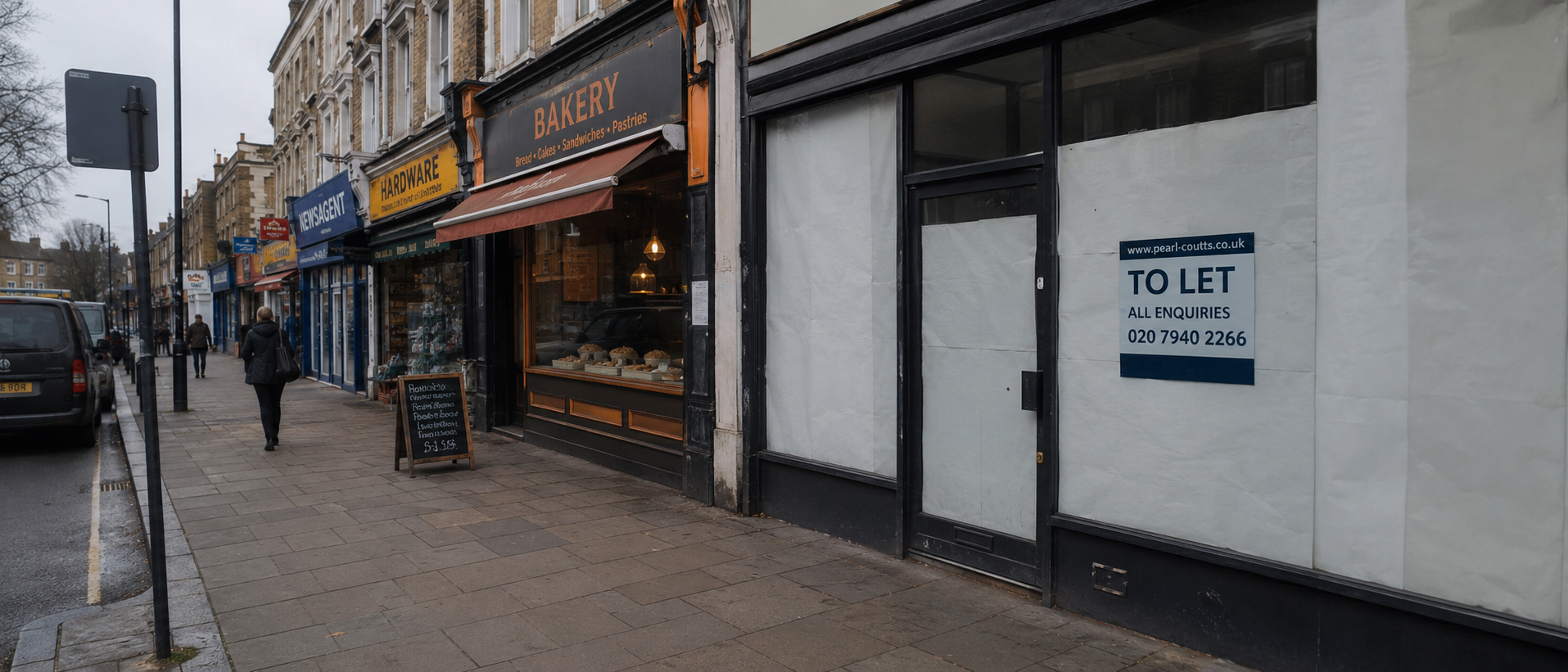
The measure
Abolish Business Rates and instead use Land Value Tax with different rates for different types of businesses and land use.
Four rates, tiered by use:
| Land use | Annual rate | Impact vs current rates |
|---|---|---|
| Commercial and office | 1.5% | −44% for London offices |
| Retail (high street) | 1.0% | Supports struggling sector |
| Industrial and warehouse | 0.75% | −75% for factories |
| Agricultural | 0.25% | Protects food production |
Land Value Tax applies the principle directly: tax what you want less of. Land sitting idle pays. Businesses operating, employing and creating value pay less.
Expected impact
- Cost for businesses needing physical premises fall
- High streets become more attractive for business
- Manufacturing boom as a result of low LVT, no NI and availability of plentiful capital from UK pension funds
- Almost all derelict land goes on the market and begins to be developed
- Boom in construction jobs and technologies to keep up with the demand for development
Cost and revenue
| Revenue change | Annual |
|---|---|
| Business rates abolished | −£26bn |
| Business Land Value Tax (tiered by land use) | +£31.5bn |
| Net new revenue | +£5.5bn/year |
The additional £5.5bn above current business rates comes from previously untaxed vacant and underdeveloped land that currently pays nothing under the rates system.
Evidence and assumptions
Business rates have been identified by virtually every business organisation in the UK as a major structural obstacle, particularly for smaller businesses and the high street. They create a cliff edge that discourages expansion and favour online retailers, who use less rateable space per pound of revenue, over physical ones.
The Land Value Tax alternative cannot be gamed. Land value is objectively assessable. It cannot be disguised as intellectual property or shifted to a lower tax jurisdiction. The land is there, it has a value, and the owner must use it well so that it’s an asset rather than a liability.