Restoring Communities
Current taxes reward sprawl and punish density. The Land Value Tax reverses that.
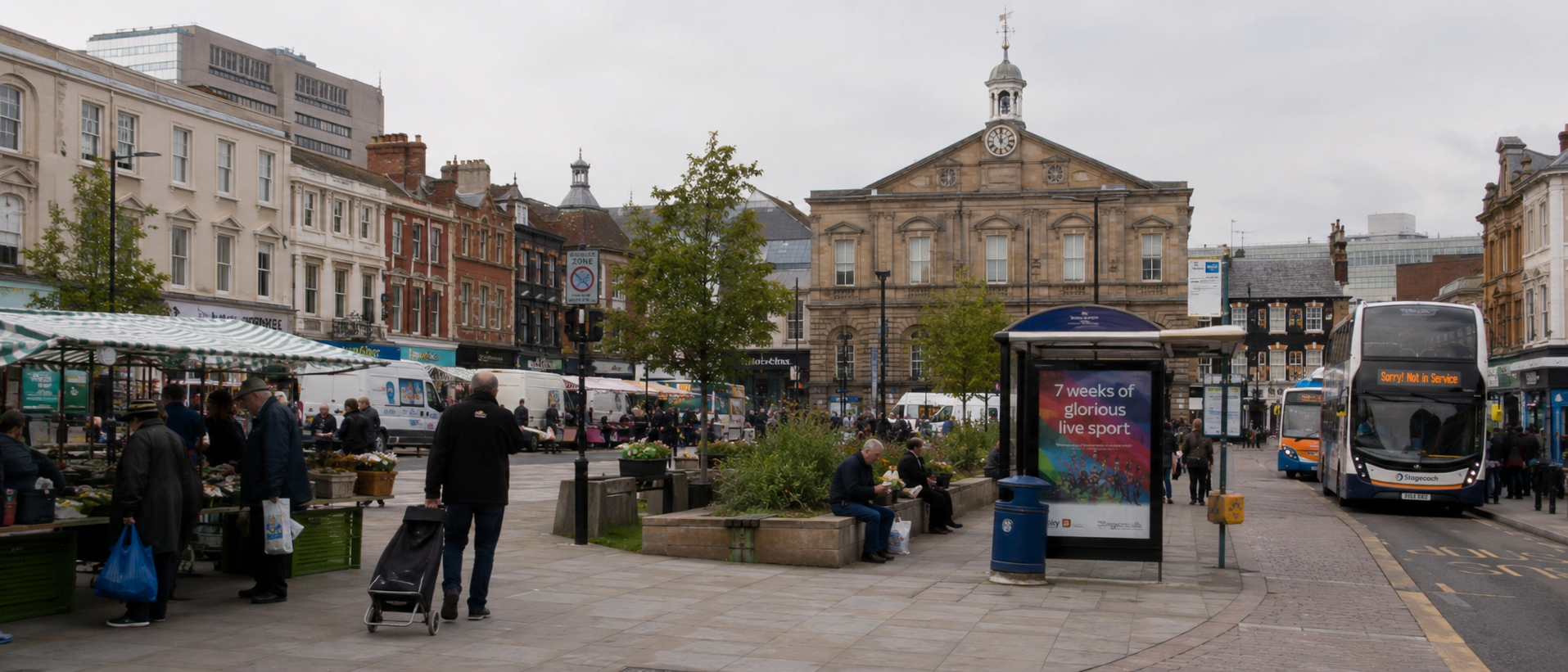
The measure
Business Rates abolished. Land Value Tax for the high street at only 1%, giving business an incentive to move back into the town centre.
Undeveloped or unoccupied sites still pay which incentivises positive and productive use of all premises.
An Enhanced Digital Services Tax asks online retailers to pay a bigger share.
Everyone agrees our high streets have seen better days. But with the right incentives their best days may lie ahead.
Business Rates have helped create these challenges. Land-hungry out-of-town developments incur very low rates while efficient multi-storey buildings in town centres are taxed more heavily. It is exactly the wrong way round.
It doesn’t make sense to chew up land on the edge of town with big box buildings and endless acres of parking.
It’s time to price the market so developers make better use of land, one of our most precious assets. Parking should be underground, on multiple stories or ideally made unnecessary by integrating development next to great public transport.
Expected impact
- High street renaissance as retailers rush to get back in
- Decline in car use as people find more of what they need nearby
- Fewer out of town retail parks
- Ground-level car parks increasingly redeveloped as housing
- Denser development makes more public transport plans viable
Evidence and assumptions
Property developers follow the incentives of the current system. Those incentives are the problem, not the people who respond to them. They find legitimate advantage in practices such as land banking: holding undeveloped land until the optimal moment. Sometimes that moment follows public investment in local infrastructure (a new school, or tram line raises nearby land values; the landowner, not the public, captures the gain). Sometimes it is driven purely by scarcity value. Either way, the result is slow development at low density and rising prices.
The Land Value Tax changes the calculation at its root. Holding idle land or developing it inefficiently now carries a significant extra cost.