Carbon Tax
The price signal that unlocks the energy transition: no mandates, no moralising.
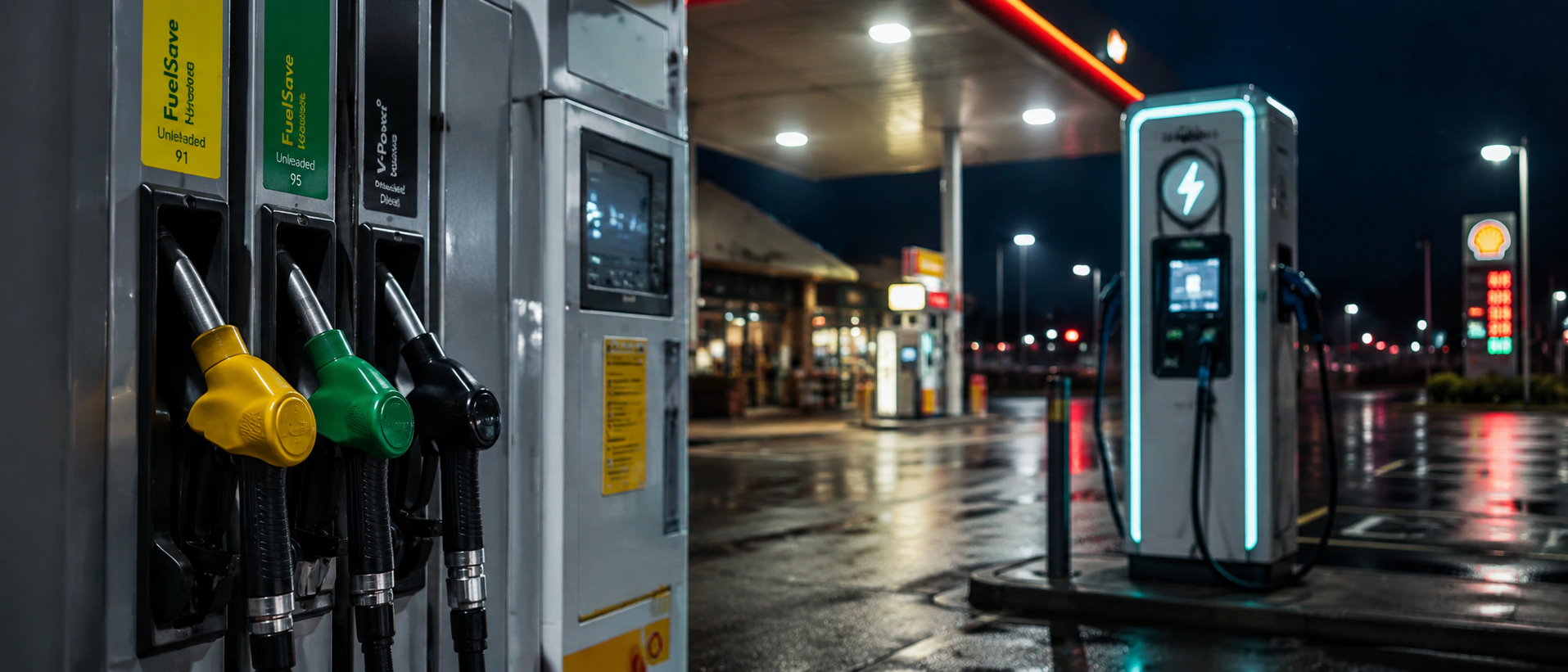
The measure
A tax on direct production of CO2 through purchase of petrol, diesel, gas and heating oil.
Applied to electricity bills based on percentage coming from renewable sources, with customers able to buy from better suppliers or at better times through smart meters and dynamic pricing.
Replaces Air Passenger Duty as fairer reflection of emissions. A direct incentive for sustainable aviation development.
The Carbon Tax is honest and yet it goes with the grain of our nature. It does not ask us to want less and it doesn’t ban anything. It simply changes the price.
We know that when consequences are priced in and, crucially, when alternatives are available, most of us make the sensible switch.
Less Exposed to Oil Volatility
Moving off fossils means global shocks affect our bills less.
The current fuel duty on petrol and diesel increases when prices rise, which means households dependent on their cars face a double whammy.
Switching to a Carbon Tax instead removes this jeopardy. Regardless of what a litre of unleaded costs, it’s the amount of CO2 we tax at the current agreed carbon price.
The Disappearing Tax
As we buy less fossil fuel over the months and years, government revenue will fall.
As this happens, the price per tonne will increase making the case more and more compelling for those still undecided.
Eventually the price will reach our cap of £300 per tonne and we’ll switch to emissions permits which can be traded.
| Year | Emissions (Mt CO₂) | Price per tonne | Revenue |
|---|---|---|---|
| 2026 | 290 | £130 | £53.5bn |
| 2030 | 238 | £140 | £33.4bn |
| 2035 | 174 | £171 | £29.7bn |
| 2040 | 116 | £228 | £26.5bn |
| 2045 | 58 | £300 (cap) | £17.4bn + permits |
The Carbon Tax fits into our principle of give and take. The new bargain between the state and the people. The costs of this new tax are more than offset by historic reductions in income tax and national insurance. Weaning ourselves off fossil fuels will comes at a price now, but will save every household a fortune over time.
Expected impact
- Increase in heat pump installations
- Increase in EV purchases
- Petrol and diesel vehicles retiring in large numbers
- Pressure on scrap yards and recycling facilities
- Almost every household is installing or waiting to install solar and batteries
- High demand for installers, a jobs boom but also a skills gap to fill
- Noticeable improvement in urban air quality
- Smart meters and dynamic pricing means most people pay less for home energy
- The UK hits 22% fewer emissions by 2030
Cost and revenue
| Revenue and transition spending | Annual / total |
|---|---|
| Carbon tax revenue (Year 1, £130 per tonne of CO₂) | +£53.5bn |
| Revenue by 2030 (as emissions fall 22%) | → £33.4bn |
| Fuel duty abolished (replaced by carbon pricing) | −£24bn |
| Net new revenue (Year 1) | +£29.5bn/year |
| Transition spending (funded from reform surplus) | |
| Heat pump grants (see The Energy Transition) | £15bn |
| Public transport investment | £8bn |
| Home insulation for lower-income households | £10bn |
| Fossil fuel worker retraining | £5bn |
| Total transition package | £38bn over 5 years |
Evidence and assumptions
The case for carbon pricing is clear: when something has a cost that is not reflected in its price, it will be overconsumed. The atmosphere has been a free dump for two centuries. Carbon pricing ends the subsidy.
British Columbia's Carbon Tax Act of 2008 was a model that worked: visible at the pump, returned to households through tax cuts, designed so the costs and benefits are obvious.
The plastic bag levy showed this at small scale. A tiny 5p charge changed behaviour dramatically because it makes the cost visible at the moment of decision. The Carbon Tax applies the same principle to the biggest challenge we face.